Best eSIM for Slovenia (2026): Prices, Networks and Which Plan to Buy
Updated · Wayfarro team
The best eSIM for Slovenia on price is Wayfarro, cheapest or level with the cheapest on every plan we compared. One gigabyte for 7 days costs $4 at Wayfarro against $4.50 at Nomad, 5GB for 30 days costs $8 against $12.50, and 7 days of unlimited data costs $21 with Wayfarro, $25 with Nomad and $27 with Airalo. Wayfarro's prices come straight from its store; Nomad's and Airalo's were checked in October 2026.
Slovenia is small enough that most visitors arrive from somewhere else: Venice or Trieste by car, Zagreb by bus, Vienna or Munich by train. That changes the buying decision more than the price does, because a Slovenia-only eSIM stops working at four borders you'll probably cross. The sections below cover the single-country prices first and the one-plan-for-the-whole-trip option second.
Best eSIM for Slovenia: prices compared
These are Slovenia-only plans, read from each provider's own Slovenia page and confirmed in US dollars. Providers change prices and run sales often, so check before you buy.
| Plan | Wayfarro | Nomad | Airalo |
|---|---|---|---|
| 1GB · 7 days | $4 | $4.50 | — |
| 2GB · 15 days | $5 | — | — |
| 3GB · 30 days | $6 | $9 | — |
| 5GB · 30 days | $8 | $12.50 | — |
| 10GB · 30 days | $12 | $16 | — |
| 20GB · 30 days | $19 | $20 | — |
| 50GB · 30 days | $45 | $45 | — |
| Unlimited · 1 day | $4.50 | — | — |
| Unlimited · 3 days | $11 | $11 | $11.50 |
| Unlimited · 5 days | $15 | $18 | $18.50 |
| Unlimited · 7 days | $21 | $25 | $27 |
| Unlimited · 10 days | $28 | $33 | $32 |
| Unlimited · 15 days | $31 | — | $45 |
| Unlimited · 30 days | $45 | — | $69 |
| Networks | Not named on the plan page | Telemach, Telekom Slovenije | T-2 |
How to read this table: Wayfarro is cheapest or level on every row, with Nomad matching it at 50GB and on 3-day unlimited. Airalo's 10-day unlimited plan is cheaper than Nomad's but still above Wayfarro's. Wayfarro is the only one of the three with 1-day and 2GB plans. A dash means the provider doesn't sell that exact plan, or we couldn't confirm its US-dollar price. Airalo's Slovenia page showed only unlimited plans when we checked.
Wayfarro's unlimited rows are its Unlimited Lite plans: 1GB a day at full speed, then 512 kbps until the next day. It also sells Unlimited Essential (1GB a day, then 1.25 Mbps) and Unlimited Plus (2GB a day, then 2 Mbps); seven days costs $22 on Essential and $25 on Plus. Nomad's page says its unlimited plans give 2GB a day at 4G/5G and 1 Mbps after that. Airalo's says full speed for the first 3GB each day, up to 20 Mbps, then 1 Mbps.
Four borders in a two-hour drive
Slovenia touches Italy, Austria, Hungary and Croatia, and a Slovenia-only eSIM goes quiet at every one of them. Kranjska Gora sits a few kilometres from the point where Austria, Italy and Slovenia meet. Piran is a short drive from Trieste and from the Croatian coast. Ljubljana to Zagreb is under two hours by road. If your trip crosses even one of those lines, buy for the route, not the country.
Wayfarro's Europe plan covers Slovenia and all four neighbours on one eSIM, and when we checked, its 1GB, 3GB and 7-day unlimited prices were level with the Slovenia-only plan. The Balkans plan covers Slovenia and Croatia and continues south through Bosnia, Montenegro and Albania, which is the one to pick for a Ljubljana-to-Dubrovnik drive. If you're only here for Ljubljana, Bled and the caves, the Slovenia plan is the cheapest way to do it.
Slovenia has used the euro since 1 January 2007 and is in the EU and Schengen, so an EU or EEA SIM roams here at home rates. Visitors from the US, UK, Canada, Australia and Asia pay their carrier's daily rate, which is where an eSIM pays for itself.
Networks and coverage in Slovenia
Slovenia has four networks: Telekom Slovenije, A1, Telemach and T-2. Telekom Slovenije, the former Mobitel, is the largest with about 1.06 million subscribers in mid-2026; A1, the former Si.mobil, is second; Telemach has about 713,000 and T-2 about 198,000. T-2 roams on A1 where it has no coverage of its own, and its parent had agreed to sell it to Telemach when we checked. Telekom Slovenije and A1 both run 5G in the 700 MHz band, which carries furthest into the valleys.
Nomad puts you on Telemach and Telekom Slovenije; Airalo on T-2, which means A1's network outside T-2's own footprint. Wayfarro's plan page doesn't name its partner, so you'll see which network you're on when you land.
Where it matters:
- Ljubljana and Maribor: Fast on every network, including the castle hill above Ljubljana and the old town in Maribor.
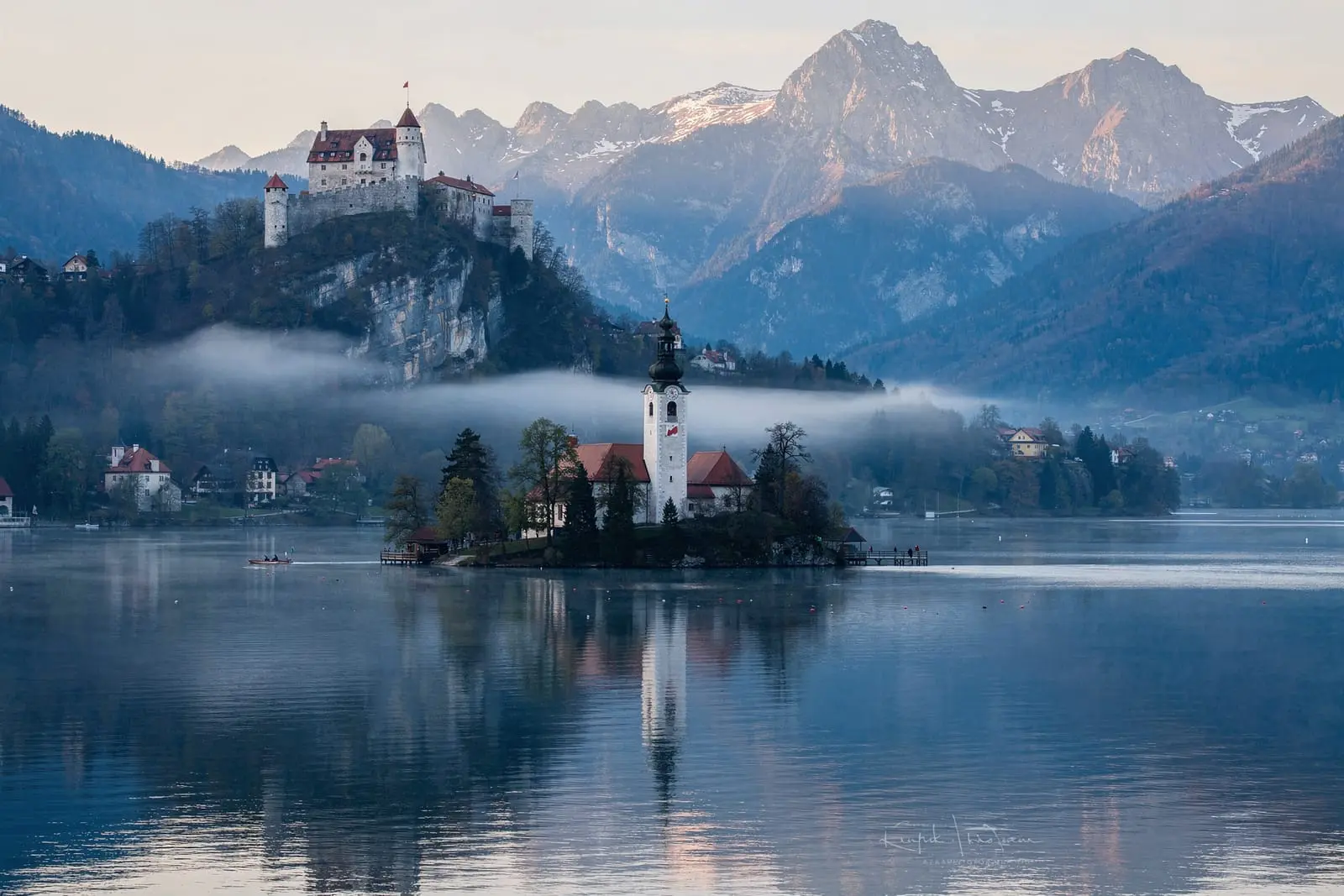
- Lake Bled and Lake Bohinj: Bled, 55 km from Ljubljana and 35 km from the airport, is well covered around the lake and up at the castle. Bohinj, inside Triglav National Park, is fine at the lake and thinner up the valleys.
- The Julian Alps: The Vršič Pass, at 1,611 m the highest road pass in the country, and the Soča valley down to Bovec and Kobarid have long stretches with weak or no signal. Hikers in Triglav National Park should download maps and routes first.
- The karst caves: There's no coverage inside Postojna Cave, which runs for more than 24 km, or Škocjan Caves. Book tickets and tell people where you are before you go underground.
- The coast: Koper, Izola, Piran and Portorož are strong, with occasional Italian or Croatian towers winning the signal race near the borders. A Slovenia-only eSIM then shows no service until you move back into Slovenian coverage.
Which is the best eSIM for Slovenia for your trip?
Slovenia trips are short, so most people need less data than they think:
- Two or three days in Ljubljana: 1GB for 7 days at $4. Cafés on the river have Wi-Fi and the old town is walkable without much navigating.
- A week of Ljubljana, Bled, Bohinj and the caves: 5GB for 30 days at $8, cheaper than Nomad's 5GB. Maps, bus and train times, cave tickets and photos fit easily.
- A road trip through the Julian Alps and down to the coast: The 7-day unlimited plan at $21, so you can download offline maps for the passes without rationing. Both Nomad and Airalo cost more for the same week.
- A longer stay or a laptop: 10GB at $12 or 20GB at $19. Hotspot is allowed on every Wayfarro plan.
- Slovenia plus Italy, Austria, Croatia or Hungary: the Europe plan above, or build the route in the Trip Builder and let it pick.
How to set up an eSIM for Slovenia
Install at home on Wi-Fi, then switch it on when you arrive.
- Check your phone is unlocked and supports eSIM. iPhone XS and later, Google Pixel 3 and later, and most recent Samsung Galaxy phones do.
- Install before you travel. Scan the QR code or tap the install link; the step-by-step install guide covers iPhone and Android.
- Label it "Slovenia" so it's easy to pick in settings.
- On arrival, set the Slovenia eSIM as your mobile-data line and turn on Data Roaming for it. Travel eSIMs technically roam, so data won't connect without this.
- Keep your home SIM on for calls and texts with its data roaming off, so bank codes still arrive.
If you're driving in from Italy or Austria, the eSIM connects the moment you cross, because Wayfarro's validity starts on first connection in Slovenia rather than at install.
Getting in, getting around
Ljubljana Jože Pučnik Airport is small and 24 km northwest of the city, near Kranj, with a bus and shuttle link into town. Plenty of visitors fly into Trieste, Zagreb or Venice instead and drive or take the bus across, which is another argument for the Europe plan. Zagreb's airport handled 4.72 million passengers in 2025, several times Ljubljana's traffic.
- Trains: The line from Ljubljana to Lesce–Bled, 4.2 km from the lake, is well covered. The Bohinj Railway from Jesenice to Trieste is scenic and slow, with gaps in the tunnels and the Baška Grapa valley.
- Buses: Ljubljana's bus station runs frequent services to Bled, Bohinj, Postojna and the coast. Timetables are online, so a little data at the station saves a long wait.
- Free Wi-Fi: Good in Ljubljana's centre and in most hotels and hostels. Sparse at the lakes once you leave the hotel strip, and non-existent on the trails.
- Parking apps: Ljubljana, Bled and the coastal towns use app-based parking payment in many zones. That's a few megabytes a day you'll be glad to have.
Bottom line
The best eSIM for Slovenia in this comparison is Wayfarro: cheapest or level on every plan, and the only one with 1-day and 2GB options. Nomad is level at 50GB and on 3-day unlimited and names its networks, Telemach and Telekom Slovenije. Airalo's 10-day unlimited is its best price but still sits above Wayfarro's. Whichever you choose, install it at home and turn on data roaming when you arrive. See Wayfarro's Slovenia eSIM plans. Continuing down the Adriatic? The Croatia eSIM guide covers the islands and the Dubrovnik border quirks, and the Europe plan covers both countries on one eSIM.
FAQ
Should I buy a Slovenia eSIM or a Europe eSIM?
If you're only visiting Slovenia, the Slovenia plan is the cheapest. If you're arriving from Italy, Austria, Croatia or Hungary, or crossing into any of them, Wayfarro's Europe plan covers all five countries on one eSIM, and its 1GB, 3GB and 7-day unlimited prices were level with the Slovenia plan when we checked.
Which network does a Slovenia eSIM use?
Nomad's Slovenia plans use Telemach and Telekom Slovenije, Airalo's use T-2, which roams on A1 outside its own coverage, and Wayfarro's plan page doesn't name its partner, so you'll see the network when you land. Telekom Slovenije is the largest network and A1 the second; both run 5G in the cities.
How much data do I need for a week in Slovenia?
Maps, messaging, bus times and photos use about 0.5–1GB a day, so 5GB at $8 covers a week comfortably. If you're driving the Julian Alps and downloading offline maps and video every day, the 7-day unlimited plan at $21 is simpler than counting.
Will my eSIM work at Lake Bled and in Triglav National Park?
Around Lake Bled and Lake Bohinj, yes. On the Vršič Pass, in the Soča valley and on the hiking trails inside Triglav National Park, expect long stretches with weak or no signal on any network. Inside Postojna and Škocjan caves there's no coverage at all, so book tickets before you go in.
Does Slovenia use the euro?
Yes. Slovenia adopted the euro on 1 January 2007 and is in the EU and Schengen, so EU and EEA SIMs roam here at home rates. Visitors from outside the EU pay their carrier's roaming rate, which is why a Slovenia or Europe eSIM saves money from the moment you arrive.