Best eSIM for Japan (2026): Prices, Networks and Which Plan to Buy
Updated · Wayfarro team
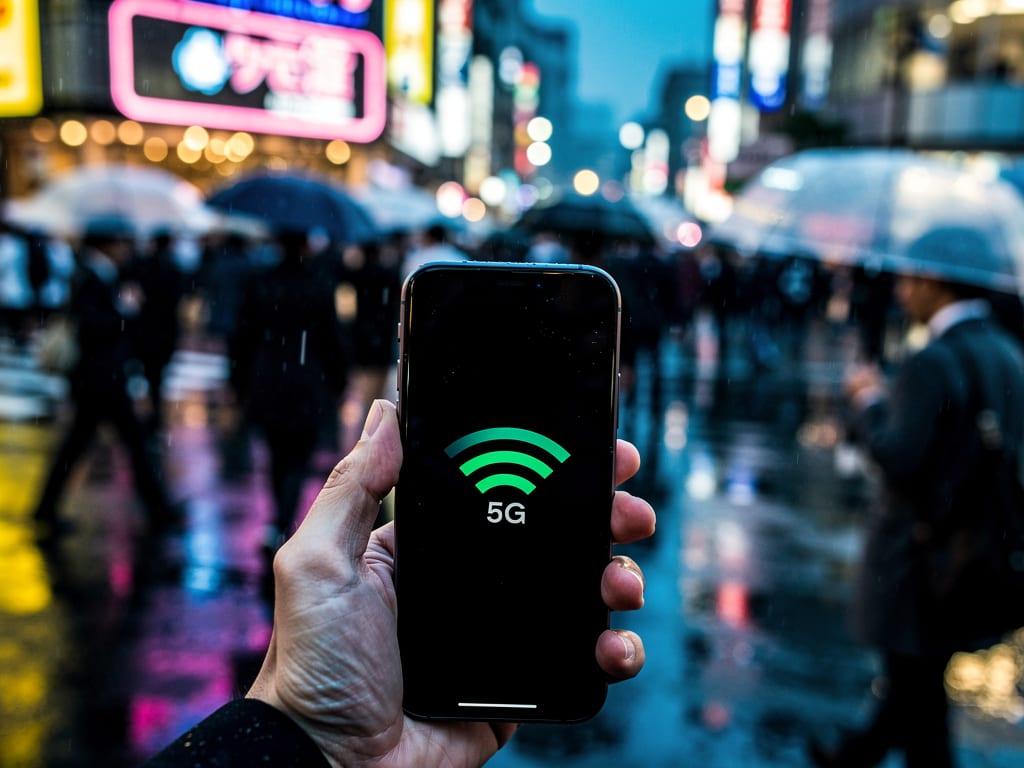
The best eSIM for Japan depends on how much data you'll use. For light use (maps, LINE, a few photos), a 1GB–3GB plan for around $4–8 from any provider here is enough. For heavy use, unlimited plans are where prices differ the most: 7 days of unlimited data costs $17 with Wayfarro, $25 with Nomad and $26.50 with Airalo. Wayfarro's prices come straight from its store; Nomad's and Airalo's were checked in September 2026. Every provider below works well in Tokyo, Osaka and Kyoto. The real differences are network, price per gigabyte, and what "unlimited" actually means.
Japan eSIM prices compared
Here are prices for the plans travelers actually buy, taken from each provider's Japan page. Providers change prices and run sales often, so check before you buy.
| Plan | Wayfarro | Nomad | Airalo |
|---|---|---|---|
| 1GB · 7 days | $4 | $4 | — |
| 2GB · 15 days | $6.50 | — | — |
| 3GB · 30 days | $7.50 | $7 | — |
| 5GB · 30 days | $10 | $10 | — |
| 10GB · 30 days | $16 | $16 (sale) | — |
| 20GB · 30 days | $23 | $23 (sale) | — |
| Unlimited · 1 day | $5 | — | — |
| Unlimited · 3 days | $11 | — | — |
| Unlimited · 5 days | $13 | — | $17 |
| Unlimited · 7 days | $17 | $25 | $26.50 |
| Unlimited · 10 days | $24 | — | $34.50 |
| Unlimited · 14–15 days | $36 (15d) | $41 (14d) | $48 (15d) |
| Networks | NTT Docomo, SoftBank | KDDI au, SoftBank | SoftBank + 1 more |
How to read this table: On fixed data, Wayfarro and Nomad are within a dollar of each other at every size, and Nomad's 10GB and 20GB prices were sale prices when we checked. Wayfarro is the cheapest here on unlimited plans at every length, the only one with 1-day and 3-day plans, and the only one in the comparison with NTT Docomo. A dash means the provider doesn't sell that exact plan, or we couldn't confirm its US-dollar price. Airalo also sells fixed-data Japan plans; check its site for current prices.
Wayfarro's unlimited rows are its Unlimited Lite plans: 1GB a day at full speed, then 512 kbps until the next day. It also sells Unlimited Essential (1GB a day, then 1.25 Mbps) and Unlimited Plus (2GB a day, then 2 Mbps). Seven days costs $21 on Essential and $33 on Plus.
Why the network matters more than you'd think
Japan has three major networks: NTT Docomo, KDDI au and SoftBank. In central Tokyo, Osaka or Kyoto you won't notice a difference. They're all fast, and 5G is common in the big cities.
The difference shows up once you leave the cities:
- Rural routes and mountains: Docomo has the widest coverage. It matters on the Kumano Kodo, in the Japanese Alps (Kamikochi, Hakuba), and on smaller islands.
- Shinkansen: All three cover the main bullet-train lines, but every network drops out briefly in tunnels. That's normal and doesn't mean your eSIM is broken.
- Subways: Tokyo Metro and Toei stations and most tunnels have coverage on all three networks.
If your trip is Tokyo–Kyoto–Osaka, any network is fine. If you're driving Hokkaido or hiking, a Docomo plan is safer.
What "unlimited" really means in Japan
Every "unlimited" travel eSIM has a fair-use policy. After a certain amount of high-speed data each day, your speed is lowered until the next day. Wayfarro publishes its limits on the plan page: 1GB a day on Lite and Essential, 2GB a day on Plus, then 512 kbps, 1.25 Mbps or 2 Mbps for the rest of the day. Nomad says data continues at 512kbps once the daily high-speed allowance is used. Other providers set their own daily limits, and not all of them publish the number.
What this means for you:
- 512kbps is fine for maps, messaging and email. It's too slow for HD video or video calls.
- If you'll hotspot a laptop every day, compare the tethering rules as closely as the price.
- If your total use is predictable (say, 10GB over two weeks), a fixed plan is often cheaper than unlimited and has no daily throttling.
Which Japan eSIM should you buy?
Choose based on your trip:
- Short city break (3–5 days), light use: A 1GB–3GB fixed plan. Wayfarro's 1GB is $4 and Nomad's is $4. For a heavy-use stopover, Wayfarro's 1-day unlimited plan is $5 and its 3-day plan $11.
- One week, heavy use (video, social, navigation all day): A 7-day unlimited plan. At $17, Wayfarro is the cheapest in this comparison, and it runs on Docomo.
- Two to four weeks, moderate use: A 10GB or 20GB 30-day plan: $16 and $23 at Wayfarro, $16 and $23 at Nomad while its sale runs. Top up if you run low.
- Rural Japan, hiking, road trips: Pick a plan on NTT Docomo.
- Laptop tethering every day: Avoid plans with a small daily hotspot cap.
How to set up an eSIM for Japan
Install at home, turn it on when you land. It takes about two minutes:
- Check your phone is unlocked and supports eSIM. iPhone XS and later, Google Pixel 3 and later, and most recent Samsung Galaxy phones do.
- Install over Wi-Fi before you fly. Scan the QR code or use the one-tap install link. Step-by-step install guide.
- Label it "Japan" so it's easy to pick in settings.
- When you land, set the Japan eSIM as your mobile-data line and turn on Data Roaming for it. Travel eSIMs technically roam, so data won't connect without this setting.
- Keep your home SIM on for calls and texts (turn its data roaming off to avoid charges) so you still get bank verification codes.
With Wayfarro, your plan's validity starts when the eSIM first connects in Japan, not when you install it.
Is Japan's free Wi-Fi good enough on its own?
For most travelers, no. Free Wi-Fi is available at major stations, convenience stores and many cafés, but it's patchy. Many hotspots need a sign-in, and it's missing exactly when you need it most: finding a restaurant in a side street, checking the next train, or translating a menu. A $4 to $17 eSIM costs less than one taxi ride you'd take because you got lost.
eSIM vs pocket Wi-Fi vs physical SIM
- eSIM: Cheapest and nothing to pick up. Works the moment you land. Needs an eSIM-compatible phone.
- Pocket Wi-Fi: Good for a family or group sharing one connection. You need to pick it up, charge it and return it, and a deposit is often required.
- Physical tourist SIM: Sold at airport counters and electronics stores. It works, but you have to swap out your home SIM, so you lose your home number while it's in.
For solo travelers and couples with modern phones, an eSIM is the easiest choice.
Bottom line
Wayfarro and Nomad are level on fixed-data plans. Wayfarro is the value pick for unlimited plans and the only option here on NTT Docomo. Airalo is reliable but costs more for the same number of unlimited days. Whichever you choose, install it at home and turn on data roaming when you land. See Wayfarro's Japan eSIM plans, or check the Asia regional eSIM if Japan is one stop on a longer trip. The Asia plan doesn't include Japan, so you'd pair it with a Japan plan using the Trip Builder.
FAQ
Which network is best for an eSIM in Japan?
NTT Docomo has the widest coverage in Japan, especially in rural areas and the mountains. SoftBank and KDDI au are just as fast in cities. A plan on Docomo is the safest choice if you're heading into the countryside, the Japanese Alps or smaller islands.
Do Japan travel eSIMs include a phone number?
Almost none do. Tourist eSIMs for Japan are data-only. Your home number stays active on your physical SIM for texts and calls, while WhatsApp, LINE and FaceTime run over the eSIM's data.
How much data do I need for a week in Japan?
Most travelers use 0.5–1GB a day on maps, messaging, translation and some social media. That's 5–7GB for a week. Streaming video or tethering a laptop pushes it to 2GB+ a day, which is when an unlimited plan starts making sense.
When should I install my Japan eSIM?
Install it at home on Wi-Fi a day or two before you fly. Wayfarro plans don't start counting down until the eSIM first connects to a Japanese network, so it sits unused until you land.
Is an eSIM cheaper than pocket Wi-Fi in Japan?
Usually, yes. A pocket Wi-Fi rental adds deposit, pickup and return hassle, plus a device to charge. An eSIM costs from $4, lives inside your phone and needs no return. Pocket Wi-Fi still makes sense for a group sharing one connection.